
At the dawn of a new millennium, this exhibition draws a portrait of Québec's art, literature, oratory and music as they were at the turn of another century, two hundred years ago. The object of this theme is to show how the imagination of literate Canadians, from both the French-language community and the British elite, took shape. By studying the period's men, women, writing tools, instruments and printed matter, we wish to show the influences and forces of action and reaction at play in the definition of the literary and the pictorial, at the fringe of the political and the controversial. Our period runs from the Conquest (1760) to the Constitutional Act of 1791; then, to the parliamentary debates that led to the 1837-1838 Rebellions all in all, one of the most turbulent and decisive eras of Québec's and Canada's history.
|
This red chalk drawing Homme assis écrivant, signed and dated 1792, is a good example of the body of anonymous works of art. As is often the case with artwork - in any medium - the identities of both the subject and the artist. Attributed to François Baillargé (1759-1830) or to François Beaucourt (1740-1794), Seated man writing. 1792, red chalk drawing on paper, 14,5 x 11.1 cm, signed and dated "F.r. B. Quebec 1792", Québec, Musée du Québec, 67.202. Photographic reproduction: Patrick Altman. |
 |
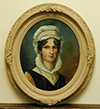
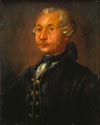
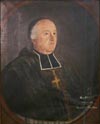
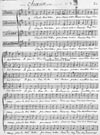
The artistic heritage of the 1760-1820 period suffers from two disadvantages: first, it is the object of but a few studies; second, many works are in a poor state of preservation. That is why some of them have been replaced by reproductions: the portraits of Pierre de Sales Laterrière and Bishop François Bailly de Messein (Room 1), the score for "Lucas and Cécile" by Joseph Quesnel (Room 2), the "Recollections of Canada" by Lady Aylmer (Room 3).
|
|
|
|
These works are poignant examples of why our heritage should get the care it deserves; it should be preserved, restored and exhibited. It is, however, sometimes better to leave certain works in their original state of disrepair than to risk destroying them through inappropriate care. Thus, it is essential that experts in preservation, accredited by a professional association, be consulted. The work done by the Centre de conservation du Québec (Québec's Centre for preservation) is indispensable in this regard.


