 |
TEKAKWITHA. |
 |
2002-2012 Croix, jardin, bronze et chapelle au sanctuaire de Pawhuska.
| Pawhuska | 2002 Croix | 2004-2008 Bronze | 2012 Chapelle |
Kahnawake avait caressé le projet d'un jardin et d'un sanctuaire dédiés à Tekakwitha : avec le sculpteur Henri Hébert en 1939-1947 et avec l'architecte Marcel Parizeau en 1945. Il est réactivé, un demi-siècle plus tard, à 2 415 km plus à l'ouest par une petite localité d'un peu plus de trois milles habitants de la nation Osage, sise à Pawhuska en Oklahoma (OK), où la croix, le bronze et la chapelle occupent la partie est d'un grand jardin au sud de l'église et du presbytère de l'Immaculée-Conception (plan légendé). Ce sanctuaire est dédicacé le 8 août 2008 et le financement qui avait manqué à Kahnawake est au rendez-vous au pays du pétrole : le coût des travaux entamés depuis 2002 est alors estimé à 250 000 $US (Tulsa World 2011.12.24 web ou pdf ; soit l'équivalent en 2021 de 312 577 $US ou de 388 927 $CAN), ce qui ne comprend pas la chapelle érigée quatre ans plus tard en 2012.
Rev. Chris Daigle, Carla Powell, Mike McCartney. Tout commence dès 1999 sous l'initiative d'Opal Delos Rector de la nation Osage ayant obtenu plusieurs faveurs par l'entremise de Tekakwitha (selon sa nièce Carla Powell). Élevée à Pawhuska, mais vivant en Arizona, Rector est aidée sur place par Mike McCartney puis, après son décès (2002.05.26), le projet est poursuivi par le Rev. Chris Daigle (voir aussi Osage News 2012.11.06 web ou pdf). |
|

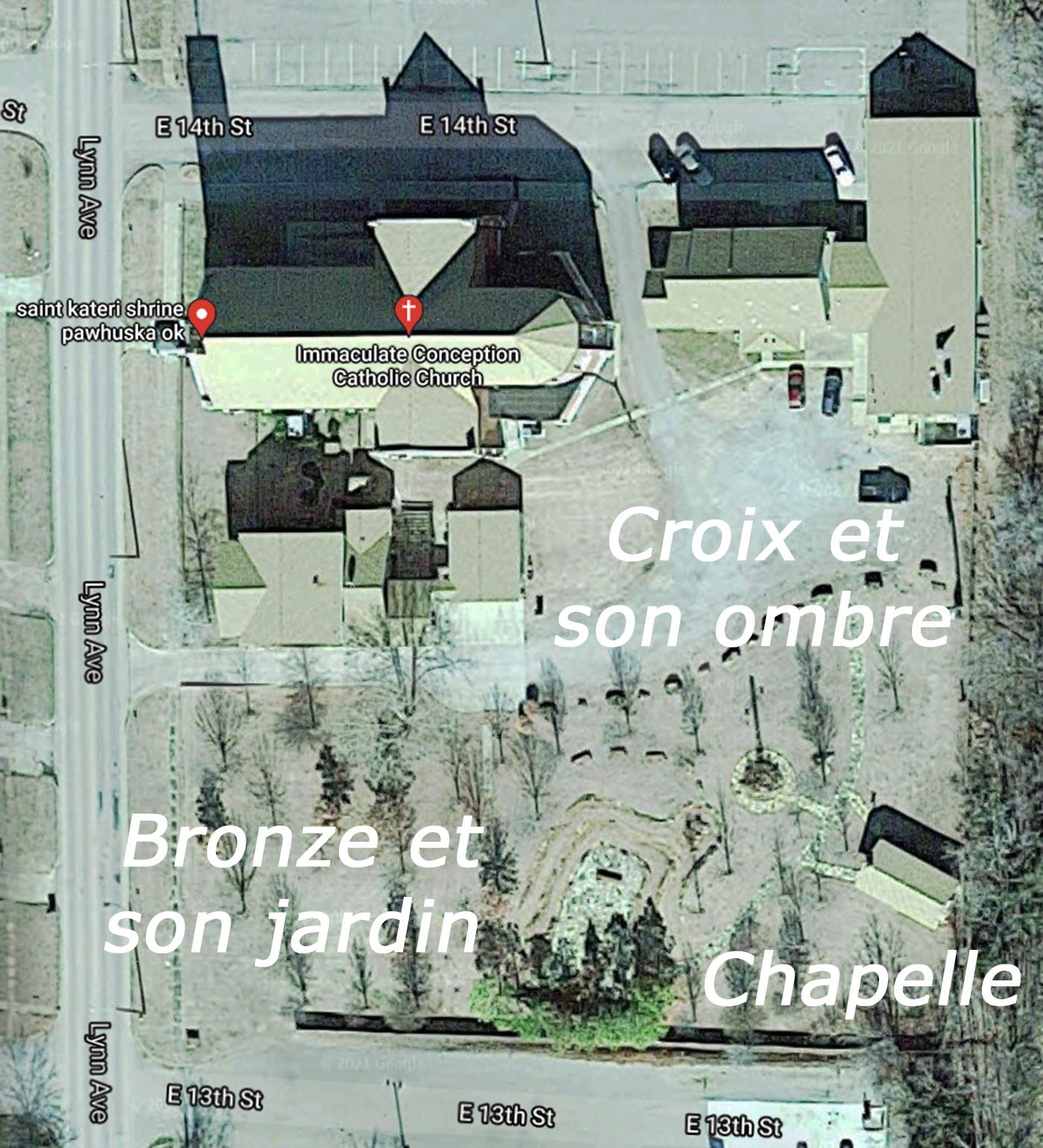
| Pawhuska | 2002 Croix | 2004-2008 Bronze | 2012 Chapelle |
 |
C'est Rector qui a suggéré les symboles à placer sur la croix, haute de 26 pieds, installée en février 2002 par l'artiste Cha'Tullis de la nation des Pieds-Noirs établi à Hominy OK : la trinité et la couronne d'épines au croisement des bras de la croix, le lys stylisé de Tekakwitha, deux plumes d'aigles pendant à l'extrémité des bras. En 2002, la croix est simplement montée sur une base de béton, bientôt camouflée par un aménagement de plantes dans une rocaille au milieu d'un terrain gazonné. Elle présente une double structure réunie par des entraits formant plusieurs intéressants motifs et dessins. La fleur de lys stylisée se superpose à toute la surface de cette croix, mais sur un seul côté. Tour autour de la base, on ajoute un pavement de pierres. Au fil des ans, l'écrin de végétation des jardins prospère, devenant de plus en plus présent et abondant. |
Photo Peeb OK 2015.06.05. |
|


Photo Debbie Bourland 2017.05.
| Pawhuska | 2002 Croix | 2004-2008 Bronze | 2012 Chapelle |
|
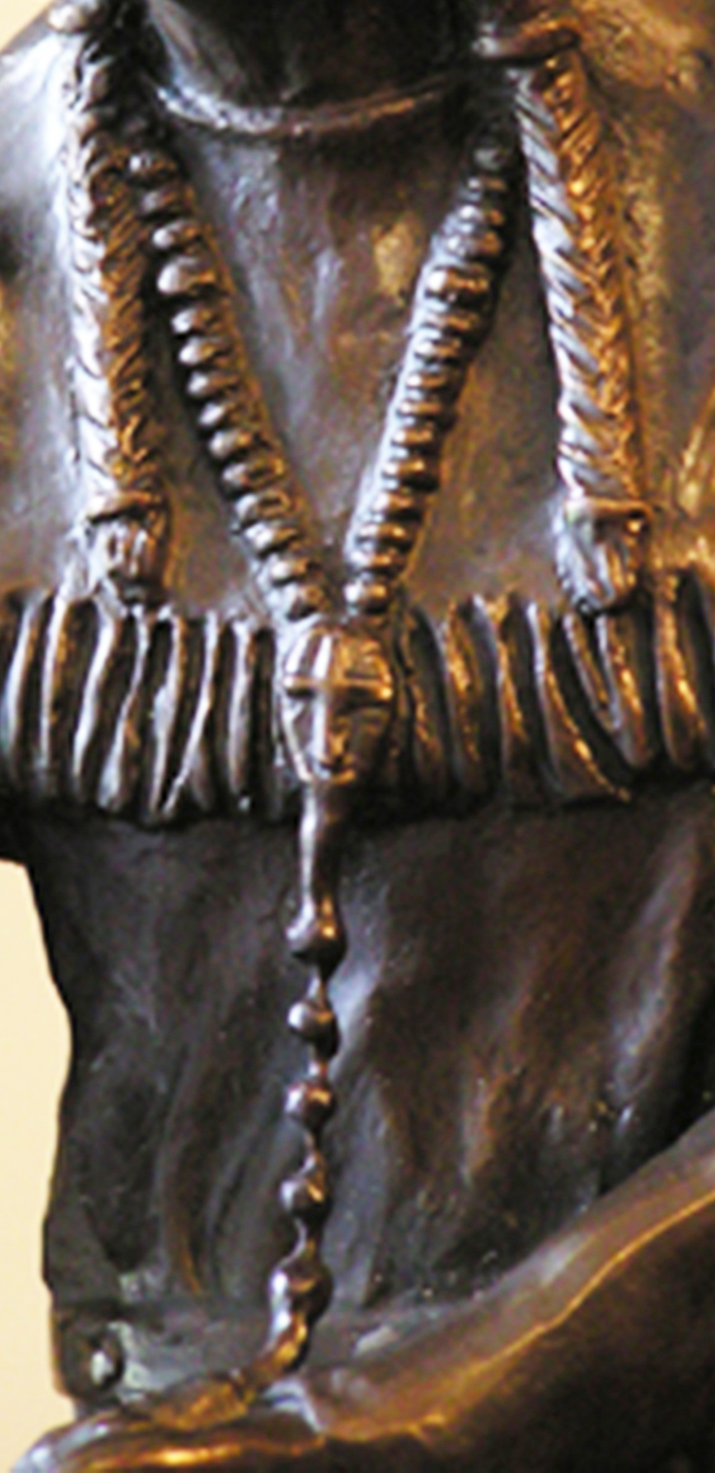
En 2004-2005, le sculpteur Joe Kenney est l'auteur d'un projet préliminaire pour le bronze du sanctuaire de Pawhuska. Le vêtement colle à la rigidité de ce corps encore relativement jeune mais au dos courbé par la maladie et les mortifications. Les franges sont utilisées depuis 1906-1927 CM-MC, par 1927 Nealis, puis maximisées par 1980 Steele. Les lignes d'assemblage des peaux de la jupe ont principalement été diffusées depuis les années 1980 par Demetz Art Studio. Le visage ovale y est résigné et doucereux comme chez Nealis, mais présente davantage de traits autochtones. Les attitudes et postures procèdent d'un tout nouveau regard, les deux bras tendus pouvant même constituer une métaphore de son nom : « Elle approche, elle meut quelque chose en avant ». Dans un geste d'humilité et de prière inhabituel et novateur, ses paumes sont tournées vers le ciel, la gauche tenant la croix du chapelet suspendu à son cou. Il se dégage de cette représentation une candide naïveté. L'ancien administrateur est alors à l'aube de sa toute nouvelle carrière de sculpteur. |
|
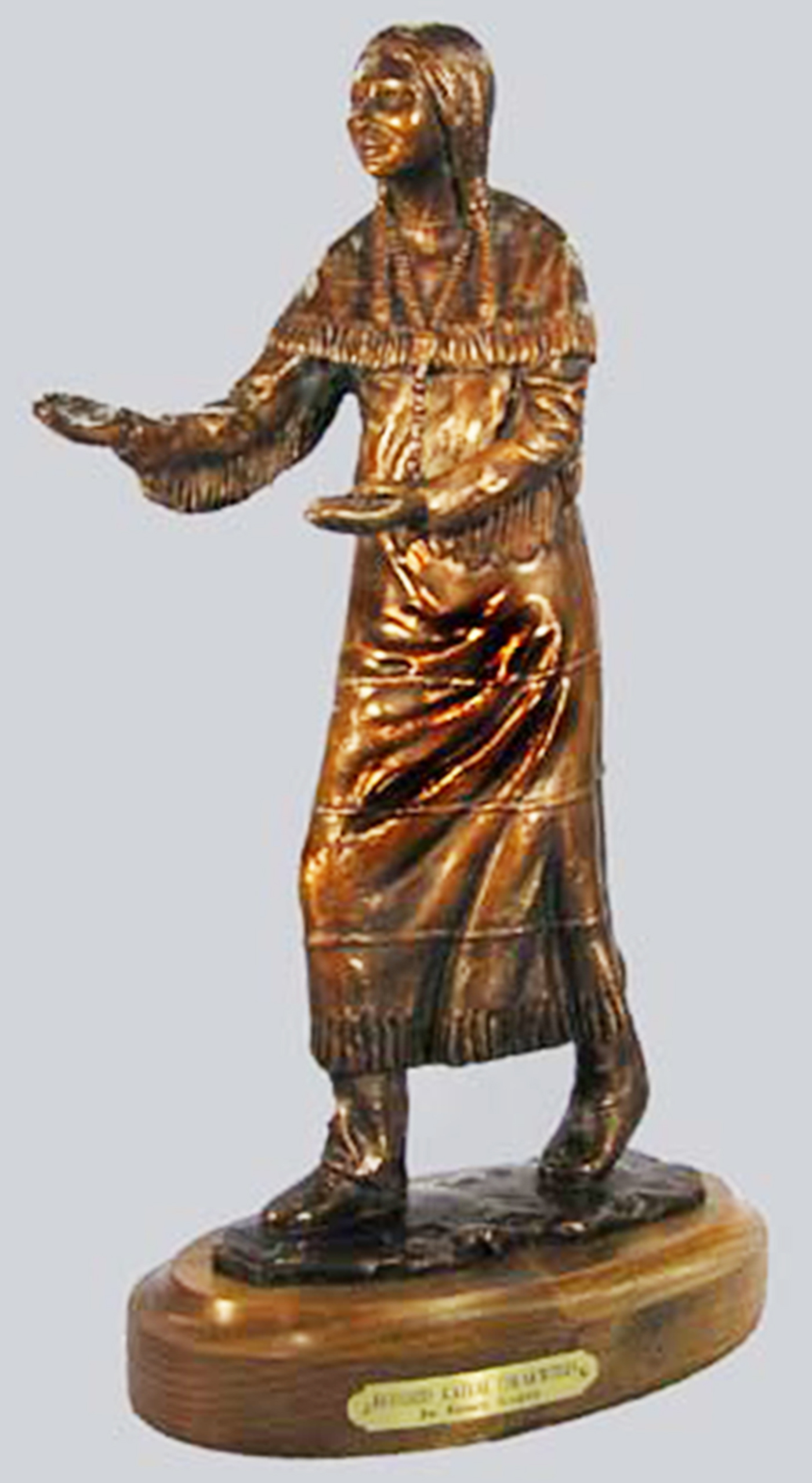

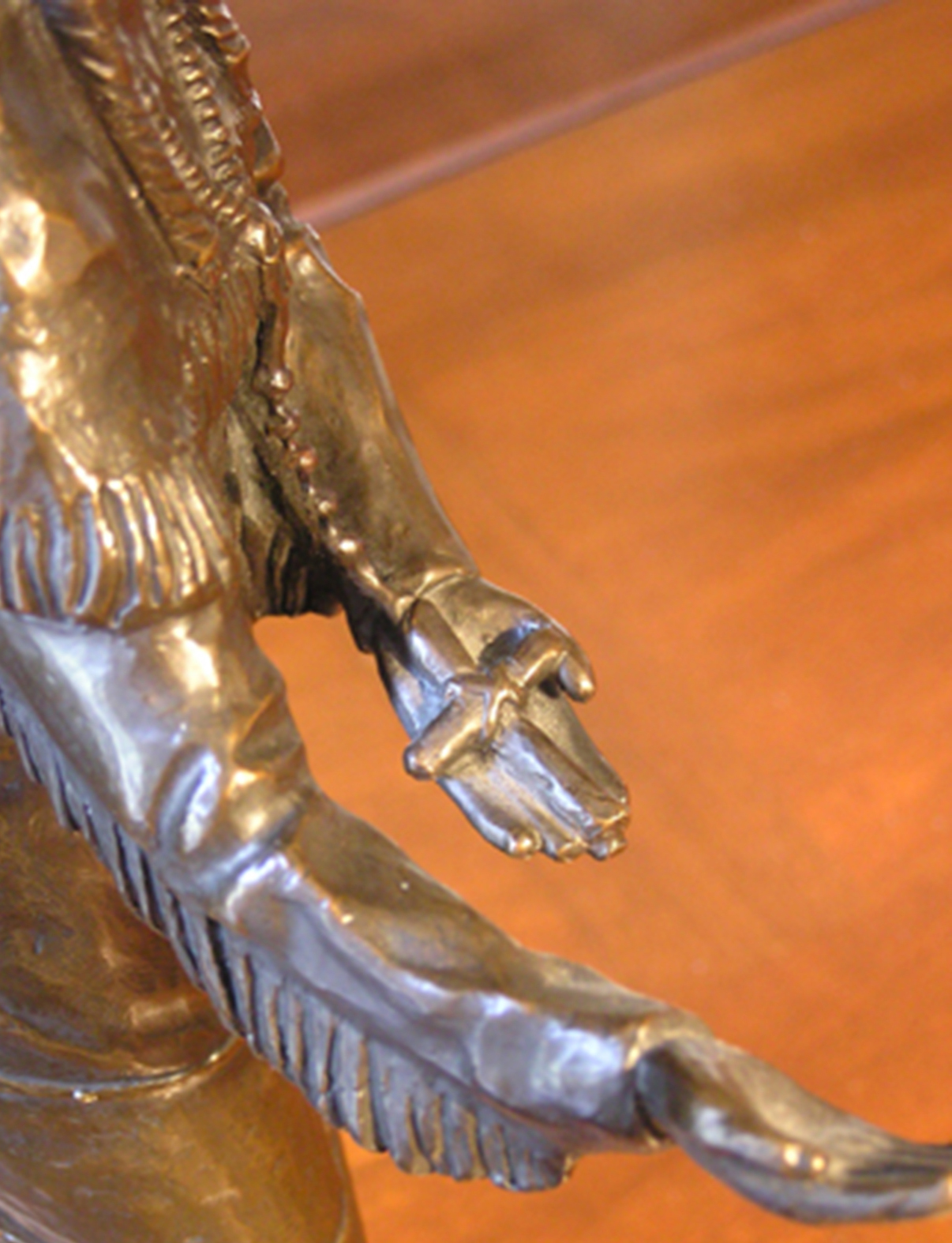
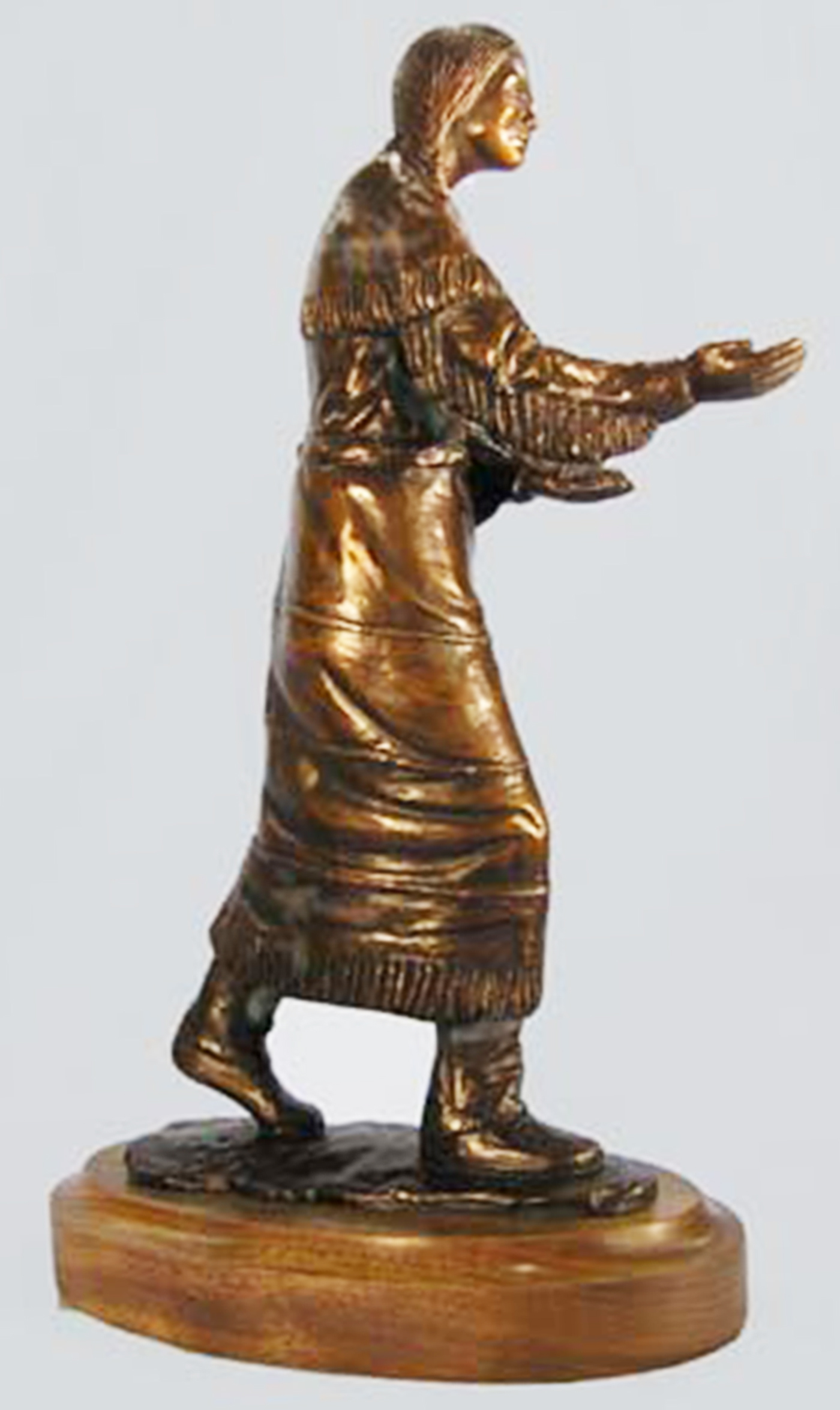
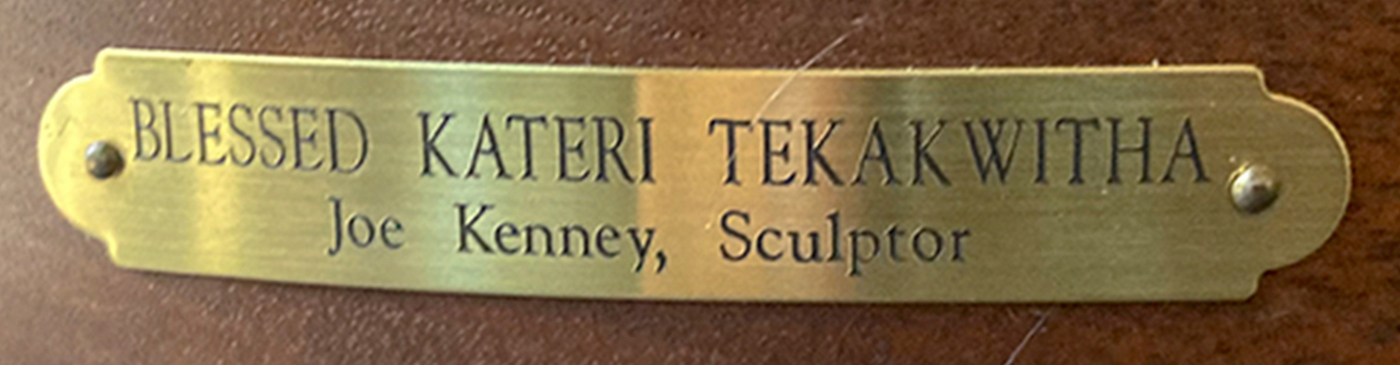
Joe Kenney, Tekakwitha, 2004-2005, statuette en bronze de 14 pouces (35,6 cm) sur base de noyer avec plaque de laiton « Blessed Kateri Tekakwitha Joe Kenney, Sculptor », modèle du projet de monument de 9 pieds pour le sanctuaire de Pawhuska, signé « Joe Kenney © 2004 11/200 » : • 17 exemplaires d'origine ; • Chamber of Commerce, Pawhuska, Oklahoma ; • Blessed Kateri Tekakwitha League, National Shrine of the North American Martyrs, Auriesville, New York. Photos : Joe Kenney ; web ou pdf ; voir également la liste des oeuvres web ou pdf, ainsi que le Tekakwitha Conference Fundraising Project web ou pdf. |
|

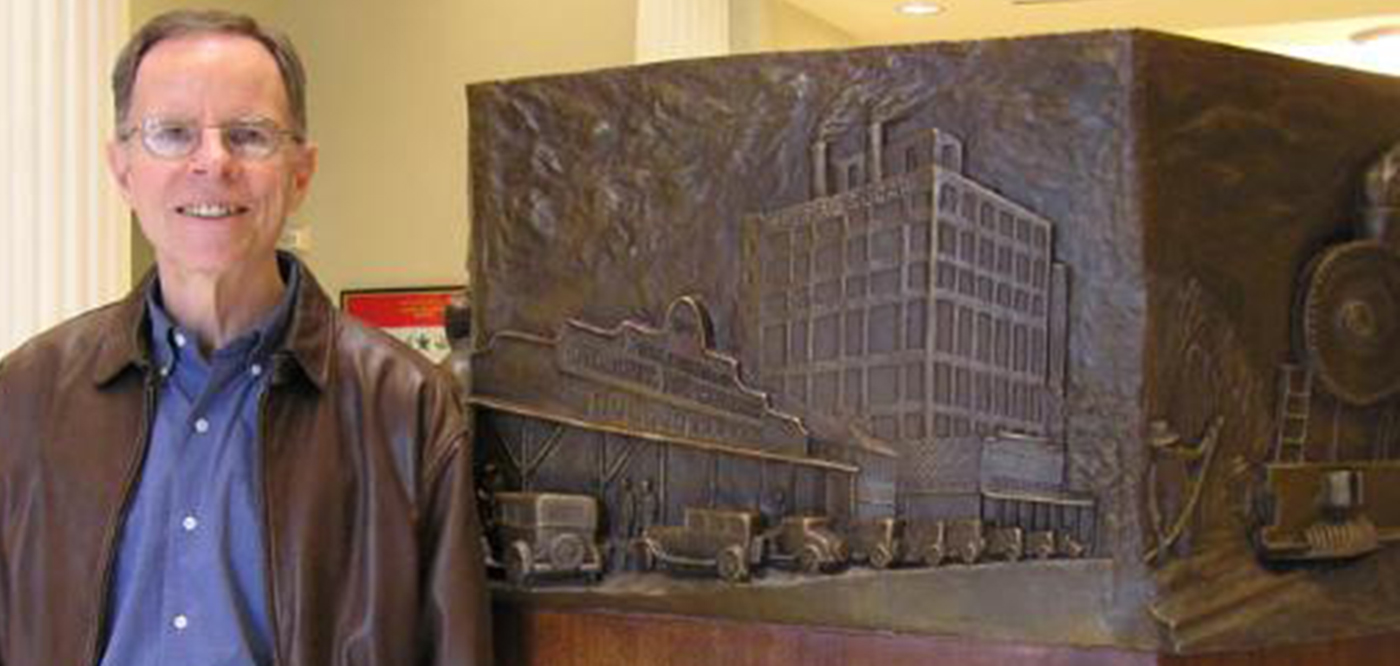
| Sculpteur établi à Georgetown au Texas, Joe Kenney vise la clarté et l'authenticité dans ses oeuvres. Né à Indianapolis en 1944, il obtient un baccalauréat (Economics and History and Political Science, Butler University) puis une maîtrise en administration de la santé (University of Minnesota), domaine où il fait carrière. À compter de 2001, il se réoriente vers la sculpture (études à University of Oklahoma, Loveland Colorado Academy of Fine Arts, Austin Sculpture Center). Depuis 2005, il est membre de plusieurs associations ou institutions (Texas Society of Sculptors, National Sculpture Society, ArteZen Sculptors Group, Oklahoma Sculpture Society, Oklahoma Visual Arts Coalition, Austin Diocesan Fine Arts Council, Austin Blanton Museum of Art) et expose dans plusieurs grandes villes (London, New York City, Baltimore, Columbus, Ohio, Tulsa, Austin). Une trentaine de ses oeuvres ont été acquises par des institutions publiques, religieuses, éducatives ou muséales (web ou pdfs Accueil et About). |
Joe Kenney posant à côté de sa City of Sugar Land Texas 1959-2009 50th anniversary commemorative sculpture, 2009 (web ou pdf). |
Collaboration du sculpteur Joe Kenney.
In 2001, I began a series of sculpture classes knowing that it would require a number of years for my skills to achieve the level I desired before casting a sculpture in bronze. A top sculptor and a foundry owner both advised me that if I was serious about sculpting at the professional level that I should study figurative sculpture under Paul Moore, Sculptor-in-Residence at the University of Oklahoma. For five academic semesters, beginning in 2003, I attended Paul Moore’s university classes on Tuesday and Thursday mornings. Paul Moore and his assistant permitted me to work alone on large projects during the afternoons. The other days of the week, I worked at home on a 24-inch square sculpting table. During the summer breaks, I worked part-time in the university studio on large sculptures, my own molds and two sculptures for the university collection. A good friend, who was a retired physician, had a profession level large woodworking shop. He insisted that I move in at no cost to work on my sculptures. I agreed to move in after completing university classes. My friend was a great help if my anatomy was not precise. He enjoyed the company of having a friend sculpting in the shop.
Joe Kenney in studio with Tekakwitha study #1 at the far left on the table (web or pdf). My discussions with the lay person at the church in Pawhuska began in 2003 while I was attending classes at the University of Oklahoma. A committee selected my 14-inch model in clay to be enlarged for the monument. The Commission Agreement was executed in 2004, after the 14-inch model was approved. I began the casting process for Kateri in 2004, with initial casting completed in 2005. The plan was to cast 35 bronze of the 14-inch model for the church to sell at $3,000 each to finance creation of a 9-foot statue of Kateri for a proposed shrine at Immaculate Conception Catholic Church in Pawhuska OK. A mold was made from the clay model and only 17 small bronze sculptures were cast at cost, to begin the fundraising process, and sold to donors for $3,000 (US) each [17 x US$3000 = US$51,000]. When my commission for Pawhauska was terminated, I ended up with a few unsold bronze statues from the 17 that were cast and hold the copyright and mold for more castings. One of the 17 bronze statues is possibly in the Sanctuary.
No. A metaphore was not in mind. I stated the model with her hands reaching out. Then, I sculpted a cross in her left hand to represent Kateri embracing Christianity where there was some hostility to Jesuit missionaries by indigenous people. The Rosary was added last.
Joe Kenney, Tekakwitha study #1, July 2007, life-size portrait bust cast in plaster with a bronze-like patina,
After the first casing of 14-inch bronze sculptures, I created Kateri Portrait Sculpture Study #1, life-size bust in clay as a model for the 9-ft. The life-size portrait model would be enlarged 1.5 times for a 9-foot statue. In the university class, Paul Moore commented that the nose looked like his grandmother, a Native American. The pastor of the church in Pawhuska told me that the nose did not look like an Indian (Native American). Paul Moore is an enrolled member of a Native American Tribe; his great-great grandmother arrived in Oklahoma (Indian Territory) under the Indian Removal Act, called the Trail of Tears (web).
Joe Kenney, Tekakwitha study #2, life-size portrait bust cast in plaster with a bronze-like patina : • July 2007, Bureau of Catholic Indian Missions, Washington DC ; • September 2015, Austin Presbyterian Theological Seminary, Austin Texas (web ou pdf ; liste des oeuvres web ou pdf).
Rather than dispute the priest’s opinion, I created Kateri Portrait Sculpture Study #2. The Executive Director of the Tekakwitha Conference introduced me to Fr. Raymond Buko, S.J., who had taken pictures of Mohawk women in 2006. Fr. Buko and me communicated via email regarding pictures that would be helpful for my sculpting. Next, I created silicon rubber molds of both studies and solid plaster casts with bronze-like patinas to exhibit at the 2007 Tekakwitha Conference. I asked attendees which of the two studies they preferred. A Mohawk Tribe member stated that one of the two portrait studies looked very familiar. I did not tell her that Fr. Buko had sent photos of her to me, with her permission, to use for my sculpting. Studies #1 and #2 for the 9-ft bronze have not been cast in bronze. These two studies in plaster, listed on my websites, are all gifts. It is my practice to not sell plaster studies. To the best of my knowledge, the two different life size portrait sculptures cast in plaster are not in Pawhuska.
The commission agreement was terminated in 2007, at my recommendation, before the enlargement to monument size, upon me learning by a lay person that the Catholic pastor selected another artist from Pawhuska who owns a bronze foundry, and my conclusion that the approved design would never satisfy this priest. The commission agreement was cancelled by mutual consent, without dispute, signed by the lay person representing the church and me. This occurred after I returned from the Tekakwitha Conference in Baltimore, Maryland, where I exhibited the 14-inch bronze and two portrait sculptures as model for the proposed 9-ft. bronze. This artist's first submission was not selected by the committee. The monument installed in Pawhuska is not what the artist initially proposed. My best guess is that the pastor had a Western movie impression of Native Amerians, and told the artist what to do. My sculpture for the proposed monument at the Pawhuska church did not show any smallpox on her face. In my research about Kateri, I read that a priest observed that the smallpox disfigurement disappeared at the time of her death. Therefore, I did not sculpt pox marks on the 14-inch (36cm) standing figure or the two life size portraits. |



Le caractère de véracité historique voulu par Kenney dans son projet de sculpture en bronze pour le jardin de Pawhuska, tel que décrit ci-dessus, est complètement modifié dans le monument finalement installé qui véhicule un prosélytisme beaucoup plus agressif.
« One sticking point was how Kateri should appear in the statue. In life, she was nearly blind and badly marred by an early bout with smallpox that left her parents and a brother dead. But one of the miracles of her life, Catholics believe, is that on her deathbed she was miraculously transformed, all signs of the disfiguring disease gone. Artist John D. Free Jr. first depicted her in her deformed state, but McCartney said that image was rejected [Tulsa World 2011.12.24 web ou pdf]. »
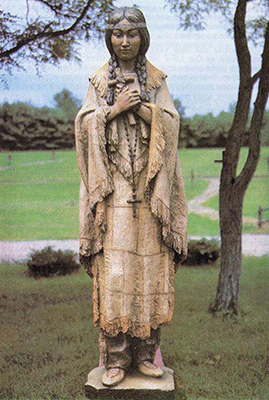
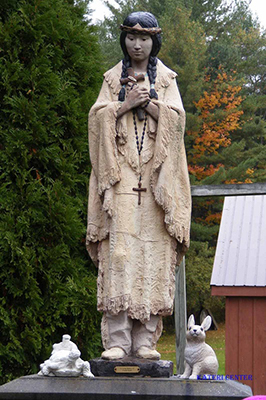
Photo Mary C. 2014.03.15. Le 8 août 2008 on dédicace le sanctuaire avec l'installation d'un bronze grandeur nature de Tekakwitha dont certaines photos montrent des nuances de coloris brunâtres. Il siège au milieu d'un dallage minéral tout en ménageant un espace végétal tout autour. Les pieds, ainsi qu'une petite tortue totem de sa tribu d'origine, reposent sur une large base ; mais la végétation les camoufle de plus en plus. |
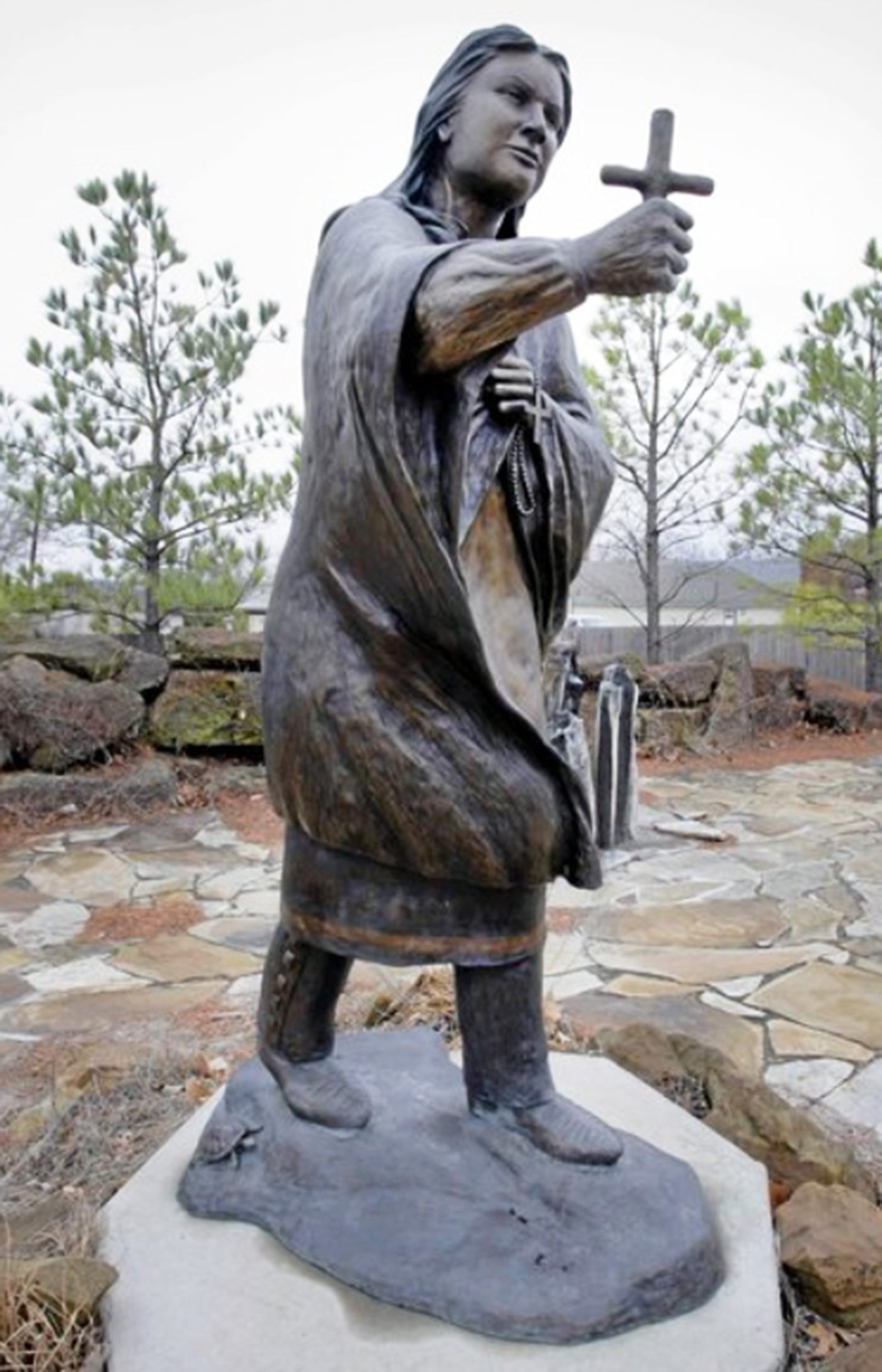

Photo Postcard Jar. |
Photo Osage County OK 2015.10.14. |
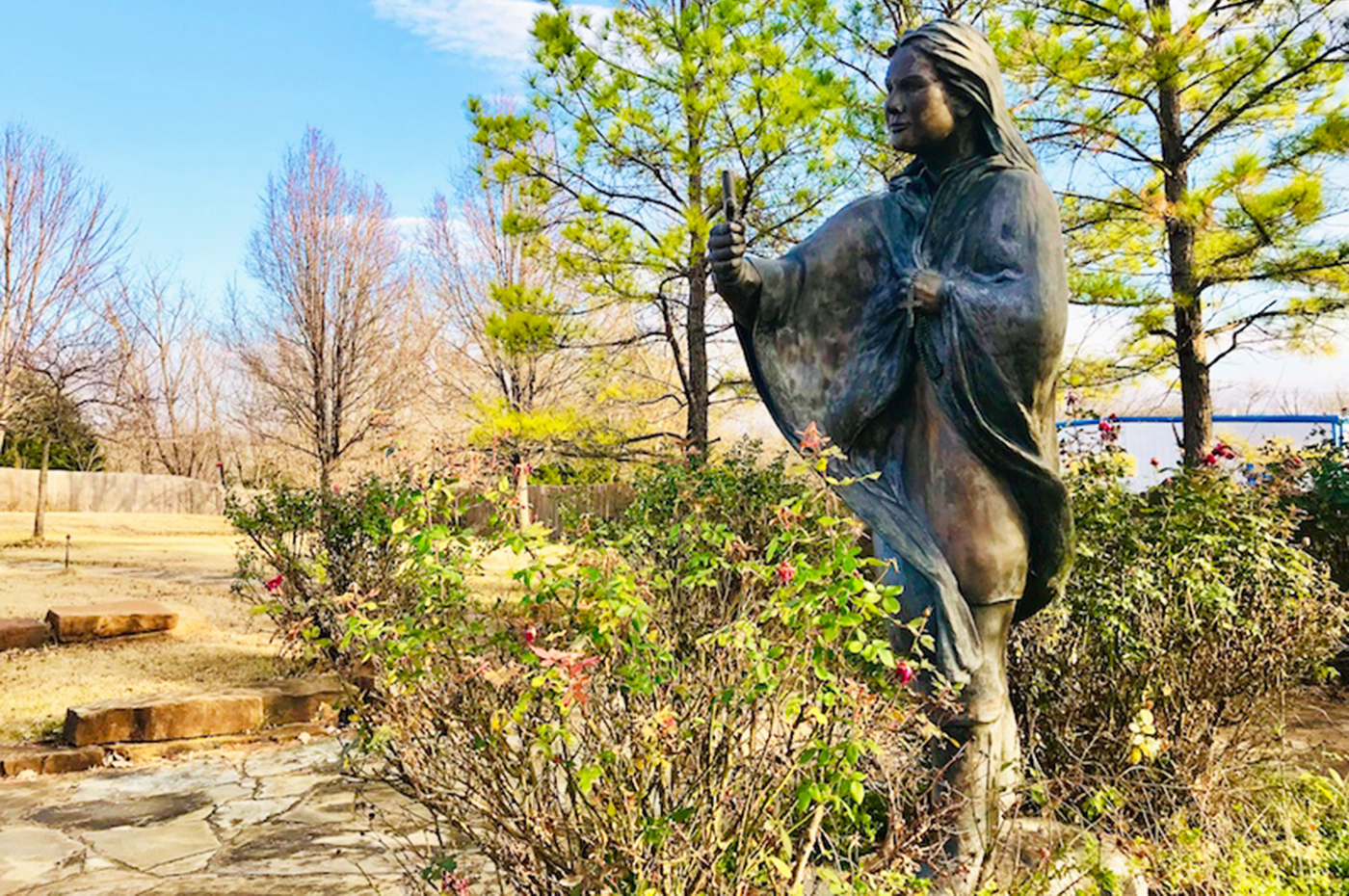

Le bras gauche se replie sur la poitine et la main tient un chapelet, alors que le puissant bras droit très musclé présente, dans un geste de prosélytisme agressif, la croix tenue d'une main ferme et volontaire s'accordant bien avec le visage trapu. La représentation du vêtement n'est pas toujours très heureuse dans sa tridimensionnalité. Le pied gauche prend le devant, mais la vue d'ensemble avec la jambe droite et la jupe est très loin d'être naturelle dans la représentation anatomique. Le résultat d'ensemble est plutôt décevant.
Photo Osage County OK 2015.10.14. |
Photo Osage County OK 2015.10.14. |
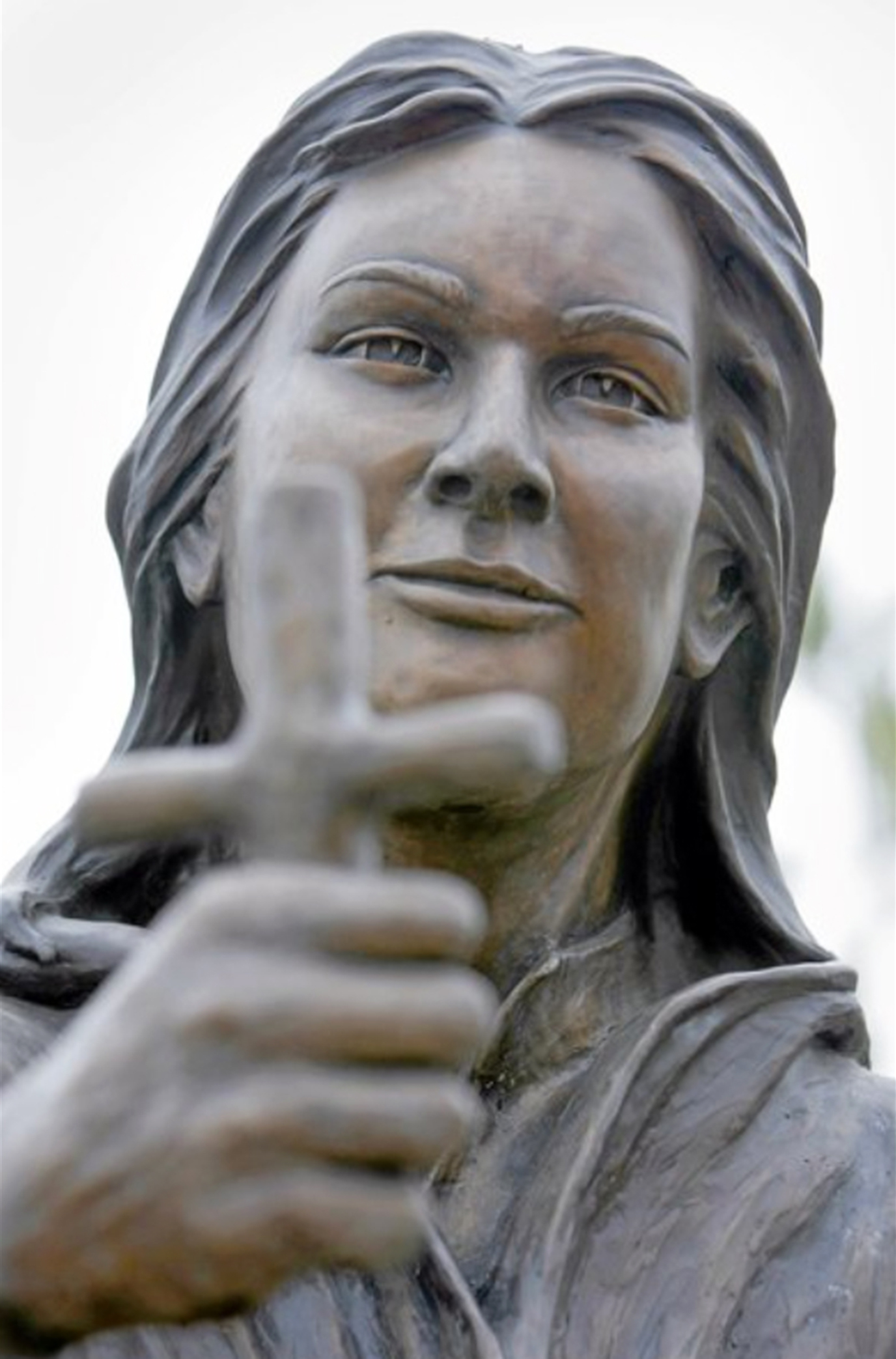
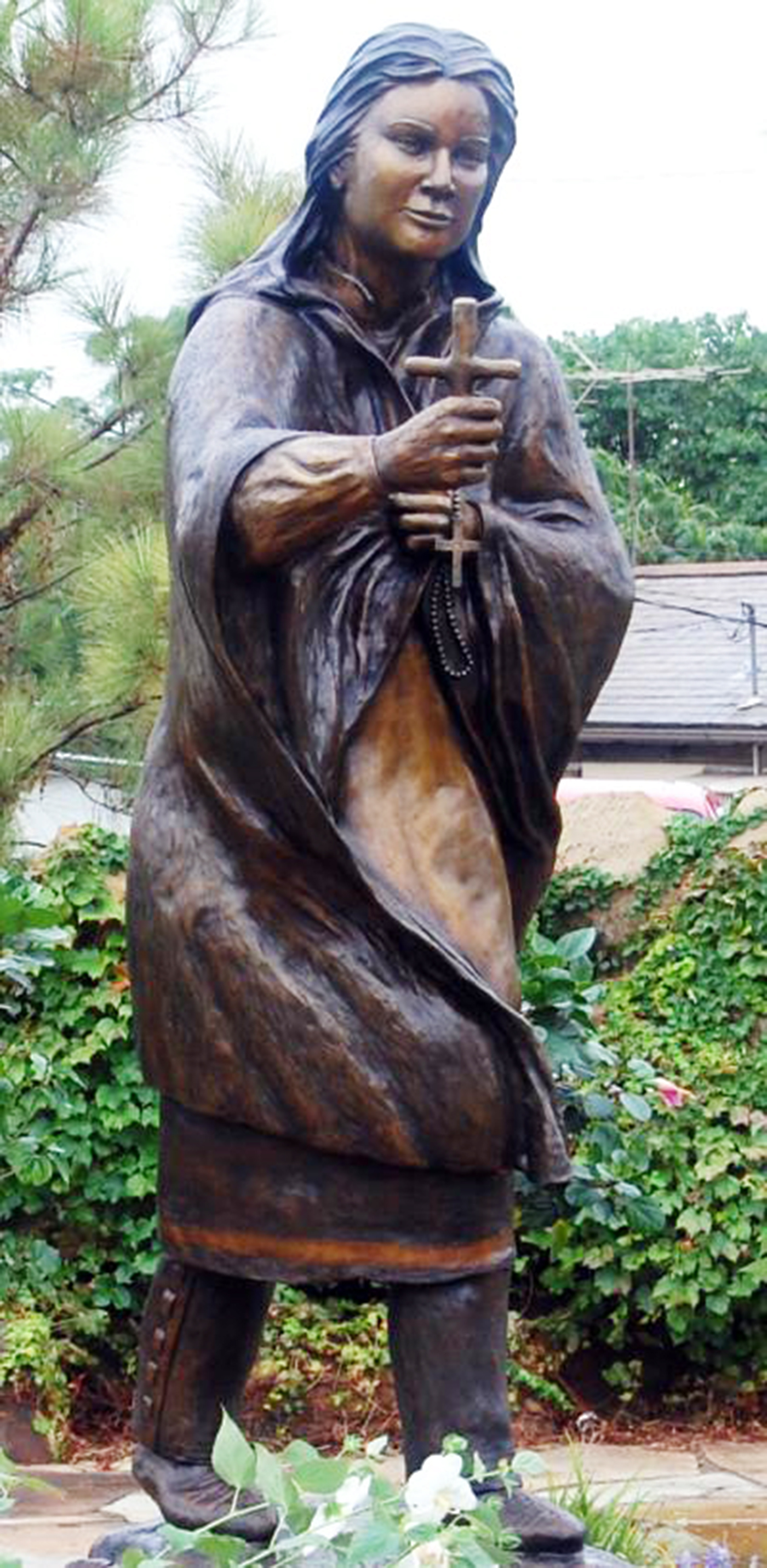

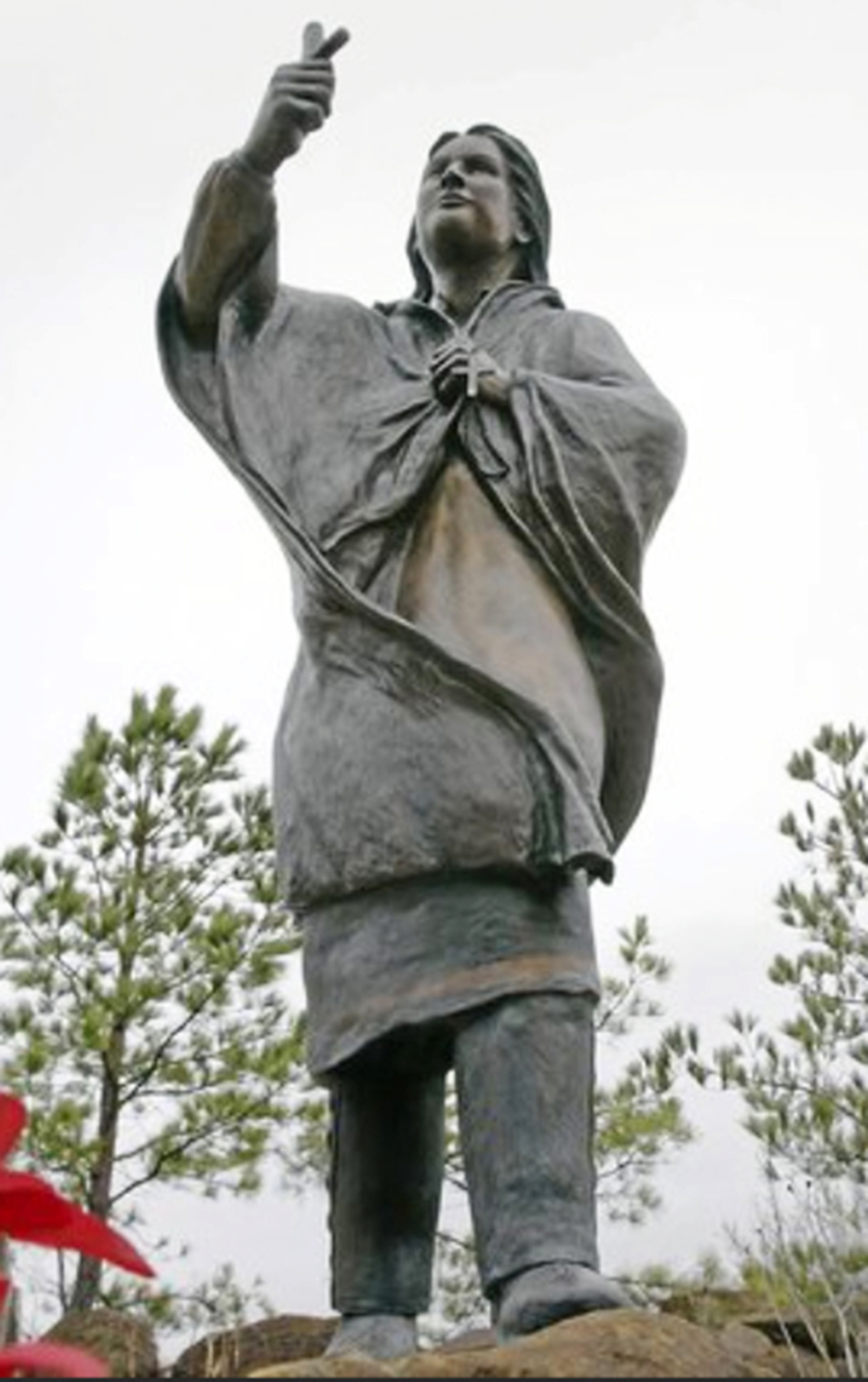
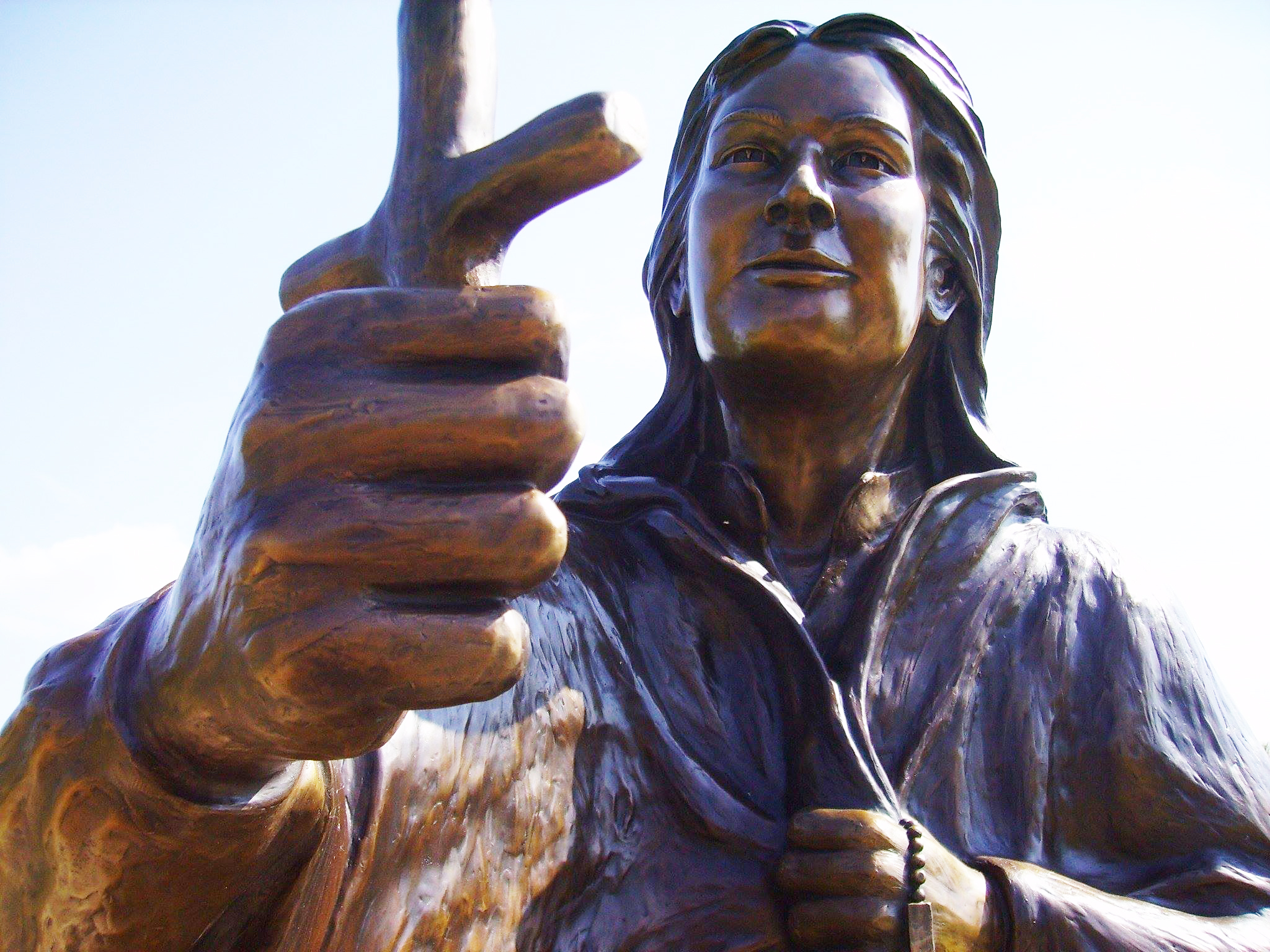
Une autre source atteste que l'oeuvre a été « sculpted by Osage Congressman John Free [Osage News 2012.11, p. 10, web ou pdf] ». Cette confusion entre le père et le fils peut-elle être solutionnée par l'analyse stylistique ? John Free père (1929-2014) était certainement plus motivé par ses sculptures de chevaux et d'autochtones Osage si l'on en juge par leurs représentations très habiles et crédibles dans leurs mouvements animés ! Caractéristiques non partagées par ce bronze de Tekakwitha qui pourrait donc être l'oeuvre du fils.
John Free, Osage Warrior in the Enemy Camp, sculpture, |
John Free, Osage Horse Catcher, sculpture, |
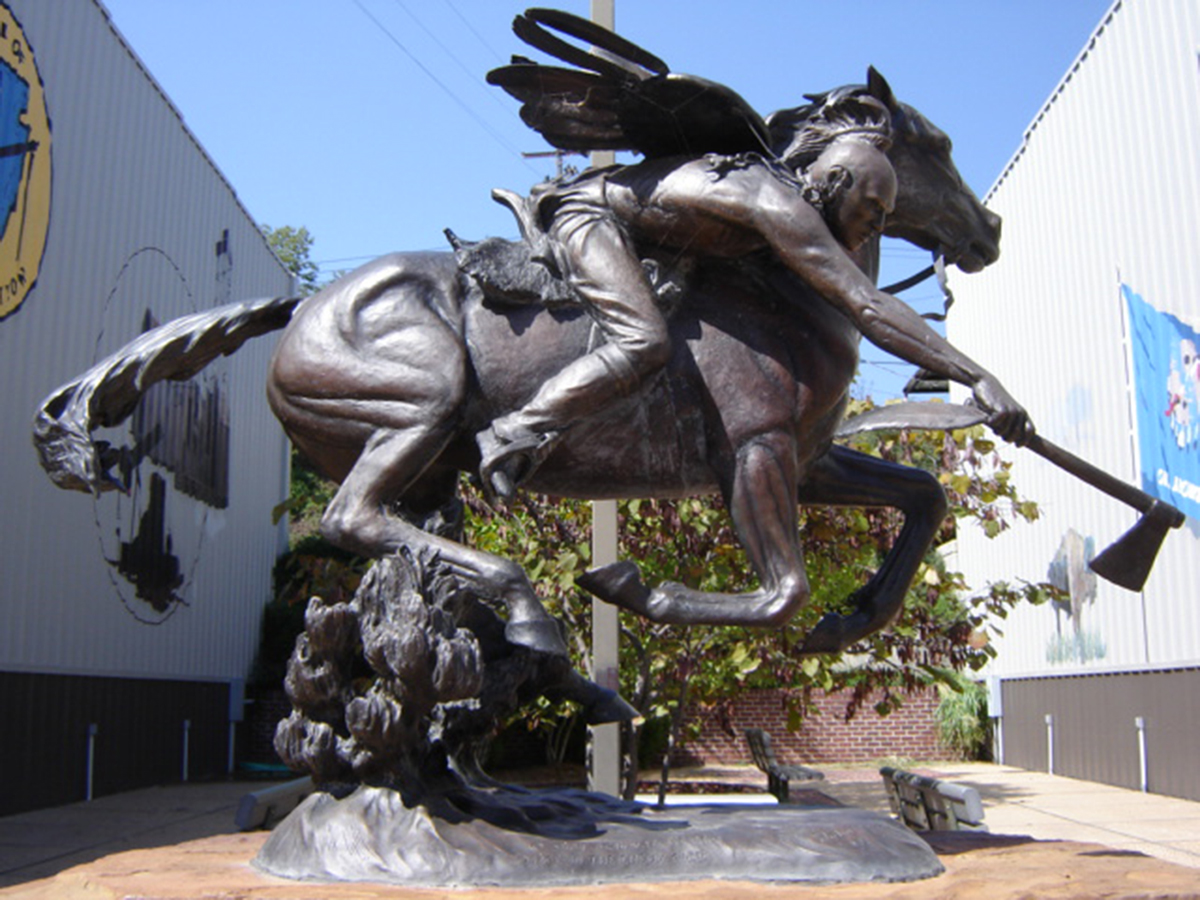

John Free, Jr. Patinas Soaring Spirit by Rosalind Carter, Tulsa (photo by Sue Moss Sullivan). |
|


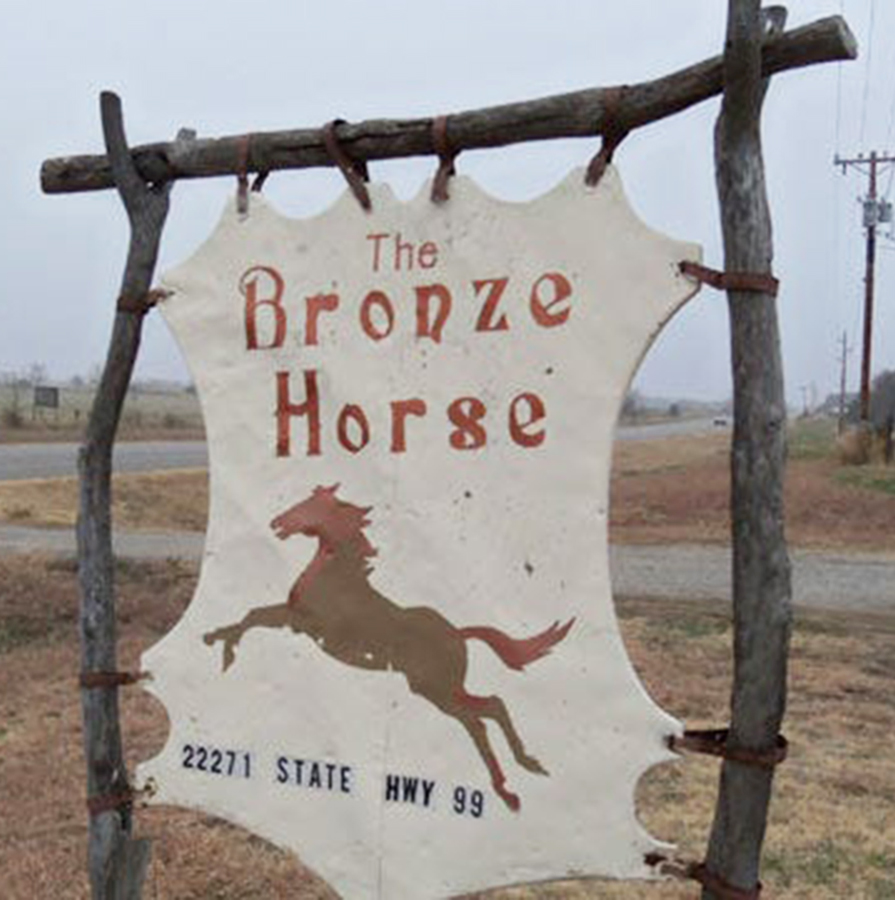
22271 State Hwy 99, Google Maps.
 |
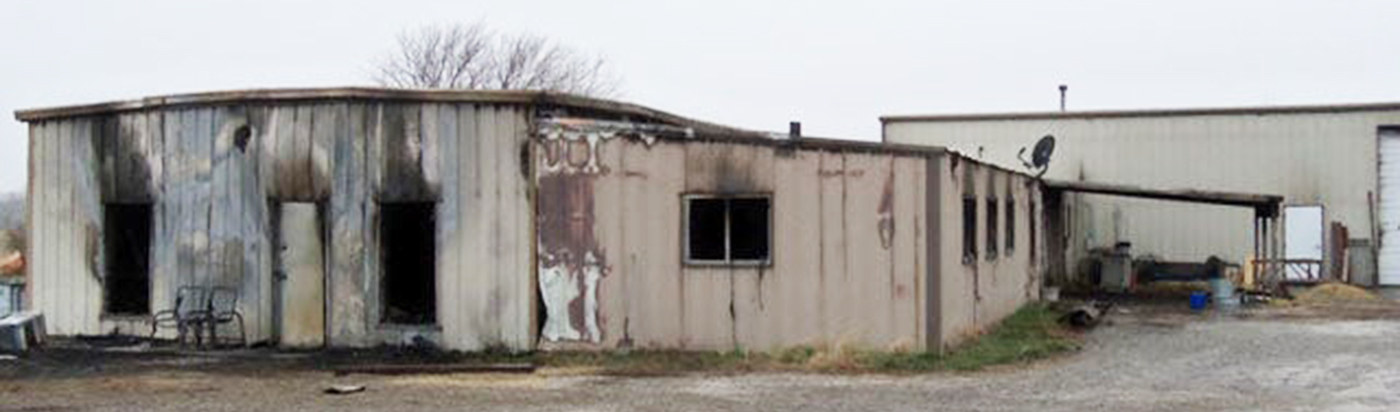 |
« His art was forged with fire and now fire has stolen his studio, taking with it many unfinished pieces, waiting to be brought to life. The Bronze Horse is where artists take clay sculptures to be molded and cast into bronze. It's an unassuming shop along Highway 99, just south of Pawhuska, and it works on pieces that end up all over the world. "It's very unique, especially, people can drive up and down this road and never know what we do out here," said John Free, Jr. Free runs the family business his father started in 1980. He said seeing it reduced to ashes isn't easy. "You see some of that history go up and it kind of touches in a way that you're not sure how you feel," Free said. "You think about everything that's gone into it and names and people." Though thick with soot, sculptures already cast in bronze can be saved. But bronzes begin as clay and wax and about 12 moldings were destroyed. "It's clay, but it's clay that somebody's taken a lot of time and sculpted and put together and spent months on," Free said. Only a few are salvageable. [...] Free, who seems to be as strong as the sculptures he creates, said he's ready for tomorrow and ready to rebuild. "We've got a lot of people that depend on us and we want to try to get back to business and doing what we do," Free said. Until he can rebuild, Free said he hopes to find a makeshift shop, so he can continue to work. [...] »
Tess Maune, « Fire Destroys Artist's Foundry Near Pawhuska », News On 6, Friday, December 7th 2012, 2:28 pm (web ou pdf).
 |
 |
|
 |

« National Guard Armory, 823 East 8th, Pawhuska, Oklahoma County, Osage. Started: Oct 1935. Completed: May 1937. Architect builder: Bryan Nolan. [...] A one unit facility, the Pawhuska Armory is rectangular (125' x 135') with offsets and is constructed of rusticated and generally coursed native sandstone. The stones were quarried some 3.5 miles west of the armory and many are huge. The roof is flat except over the drill fooor where it is arched. Parapets and pilasters, the latter at the corners and framing the main entry, provide decorative relief–as do vertical indentations in the rock work above the windows and below the parapets. The armory has elongated metal casement windows symetrically placed, three garage doors and a recessed main entryway. [...] The entire structure measured 125' by 140'. The administrative section facing East Eighth Street contained offices, a classroom, 25' by 30', locker room, showers, an arms vault, and a garage for six trucks. The drill hall, designed to double as a community center and public meeting hall, was 78' by 109'. At the west end was a 12' wide and 78' long stage. Footlights and floodlights illuminated stage and floor. Beneath the stage was a basement rifle range, 12' by 102', for indoor small arms practice. The size and style of the building made it a major addition to Pawhuska. Even before the dedication the building had begun to serve the community as a site for dances and as a convention center for the American Legion. Shortly after the dedication, the drill hall also housed a tent factory [The History Exchange, May 20, 1994, web ou pdf]. »

« The Army National Guard Armory in Pawhuska, Oklahoma, was constructed in 1937-38 at 836 East 8th Street. The historical use of the building was to house a body of the Oklahoma National Guard. The surrounding area was developed into residential properties during and after the construction of the armory. The DEQ completed remediation activities on December 5, 2011. The Armory is currently housing the Bronze Horse Foundry, and vehicle storage for the city of Pawhuska [Oklahoma Department of Environmental Quality, web ou pdf]. »
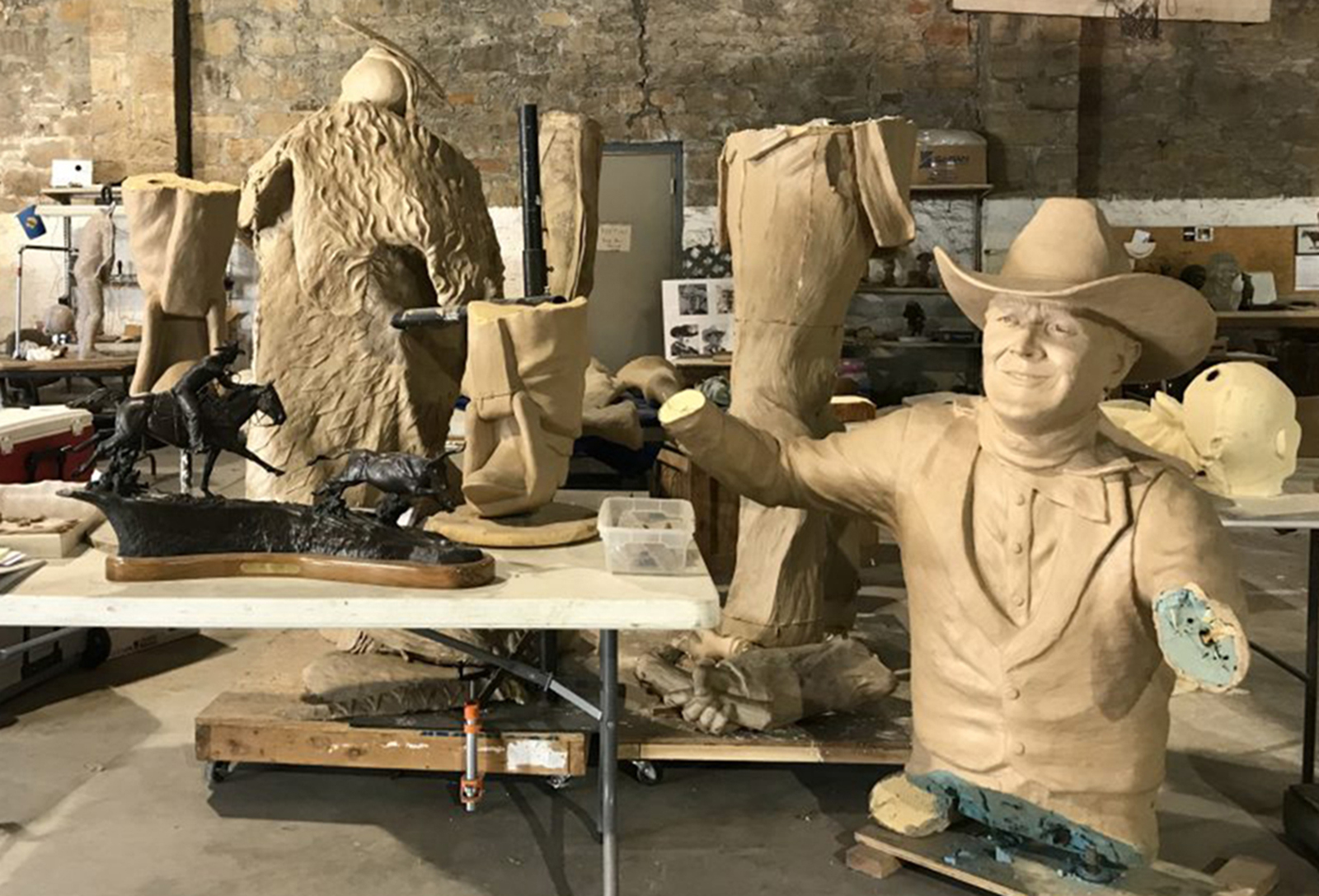
« Find the Bronze Horse Foundry. Home to the late, famed bronze artist John D. Free Sr., Pawhuska also plays home to his Bronze Horse Foundry. Located in Pawhuska at what used to the Armory, the foundary completes work for bronze projects all over the country. While not open to visitors on a regular basis, limited tours are available by appointment during which you can learn the fascinating process of creating bronze statues. For more information or to schedule a tour, call Cindy Free at (918) 287-4433 [Ann Teget, « 70+ things to do in Pawhuska », Postcard Jar, Nov 1, 2017, web ou pdf]. »
Source : 170720F5. |
Le geste fort, voire agressif, du bras et de la croix de la sculpture créée par John D. Free Jr., pour le sanctuaire de Pawhuska, a été réutilisé par la Mandan Hidatsa Arikara Nation de Fort Berthold, North Dakota (web et Google Maps), pour une flamboyante bannière exposée à la Tekakwitha Conference tenue en 2017. |


| Pawhuska | 2002 Croix | 2004-2008 Bronze | 2012 Chapelle |
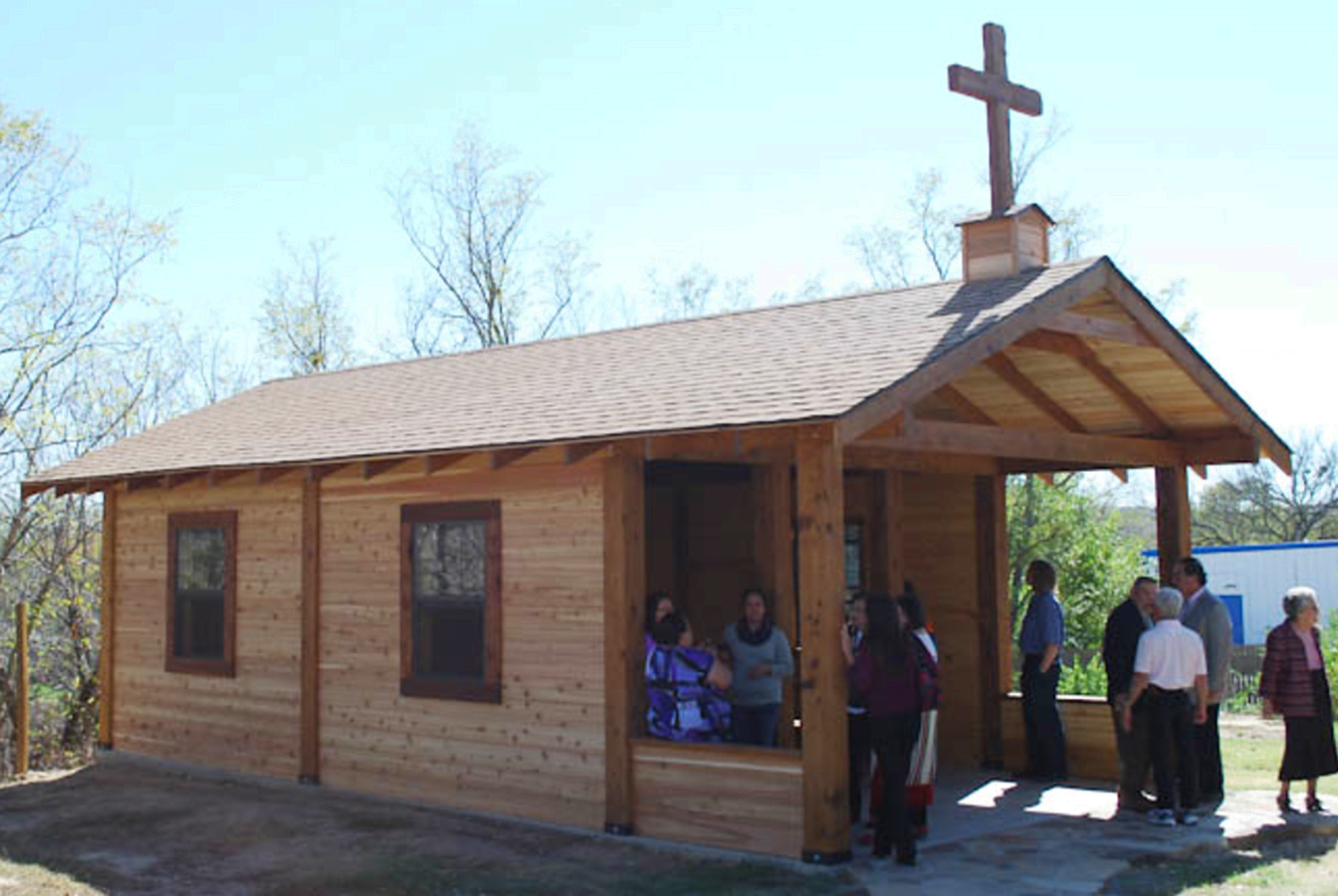
Extérieur de la chapelle, photo Osage News 2012.11.20.
Intérieur de la chapelle, photo Osage News 2012.11.20. |
Intérieur de la chapelle, photo Osage News 2016.07.14. |


Cette chapelle est inaugurée l'année de la sanctification de Tekakwitha. Dans la niche qui était vide en 2012, on retrouve une sculpture de Tekakwitha en 2016. On peut y reconnaître une oeuvre de tirage commercial diffusée en de plusieurs exemplaires par Demetz, une entreprise italienne.
Demetz et l'industrialisation artisanale en série ! |
Détail tiré de la photo de l'intérieur de la chapelle par Osage News 2016.07.14. |

| Pawhuska | 2002 Croix | 2004-2008 Bronze | 2012 Chapelle |
|
TEKAKWITHA. |
|